In 1904, the Port Stanley & Eastern Railway was chartered to run a line long the northern coast of Lake Erie (the initial charter was for Port Stanley to Port Burwell, but the promoters wanted to run all the way to Port Dover.) Some work was done grading the line, but it ran out of money and the project collapsed before any track was laid.
Five years later, in 1909, the Woodstock & Delhi Railway (chartered in 1905, but they had enough resources to actually build the line between their two namesake cities) grabbed this charter and reorganized themselves as the Woodstock, Delhi, and Port Stanley Electric Railway.
The W&D had electrified at 600VDC, but decided that for the new line from Delhi south the electrification would be 1500VDC, and by 1913 a handsome new radial connected Delhi, and ports Burwell, Bruce, and Stanley together. Most of the money coming in was from passenger traffic, but the line from Port Burwell north generated enough freight to more than break even.
This was, in the tradition of railway fever, enough for the WD&PS to develop irrational plans for expansion. They wanted to increase the tension north of Delhi to 1500VDC, which was easily done except in the city of Woodstock, which absolutely refused to allow any tension higher than 600VDC, and also to extend north to Stratford, which never got off the ground because they couldn’t get guarantees from the towns along the way (the CNR had a direct line between Woodstock and Stratford, and was providing adequate passenger service on a railway that was already there.)
By 1916, the WD&PS was substantially complete; it was running hourly trains along the coast between ports Stanley & Burwell, 6 trains a day between Port Burwell & Woodstock, and at least two freight trains a day north of Port Burwell.
Operations for the next 17 years were fairly uneventful, except for the line along the coast – the north coast of Lake Erie is windy and the wire kept being blown down once or twice a year. And this set the stage for the first abandonment on the line.
Post WW1, private automobiles started to eat away at passenger numbers on the railways, and the radials in Ontario were not immune. The WD&PS saw, starting in 1920, a slow but steady drop-off in passenger traffic, and by 1933 it had gotten pretty grim on the line between ports Stanley & Burwell. And then a spring windstorm took down about 6km of wire, the railway looked at their passenger revenues along that line, looked at the freight revenues along that line, looked at the cost of repairing the overhead, then applied to abandon everything west of Port Burwell.
The regulators didn’t even need to take more than one look to approve this abandonment, and the WD&PS moved a little further away from the edge of bankruptcy.
Passenger service on the rest of the line was healthy enough to survive until the end of WW2, but then the trickle of losses from automobile competition became a torrent and the WD&PS went back to the regulators again and abandoned the rest of their passenger service.
As a freight railway, things moved a bit slower than before as industry slowly hollowed itself out. A beltline around Delhi had been put into service in 1947, and when passenger service stopped the WD&PS was able to also abandon the street running trackage in Delhi proper.
In 1966, the WD&PS purchased a recently abandoned CNR line running between Otterville & Burgesville and subsequently abandoned their side-of-the-road line from Otterville to Woodstock (leaving the industrial trackage in Woodstock operation as a CNR freight feeder.)
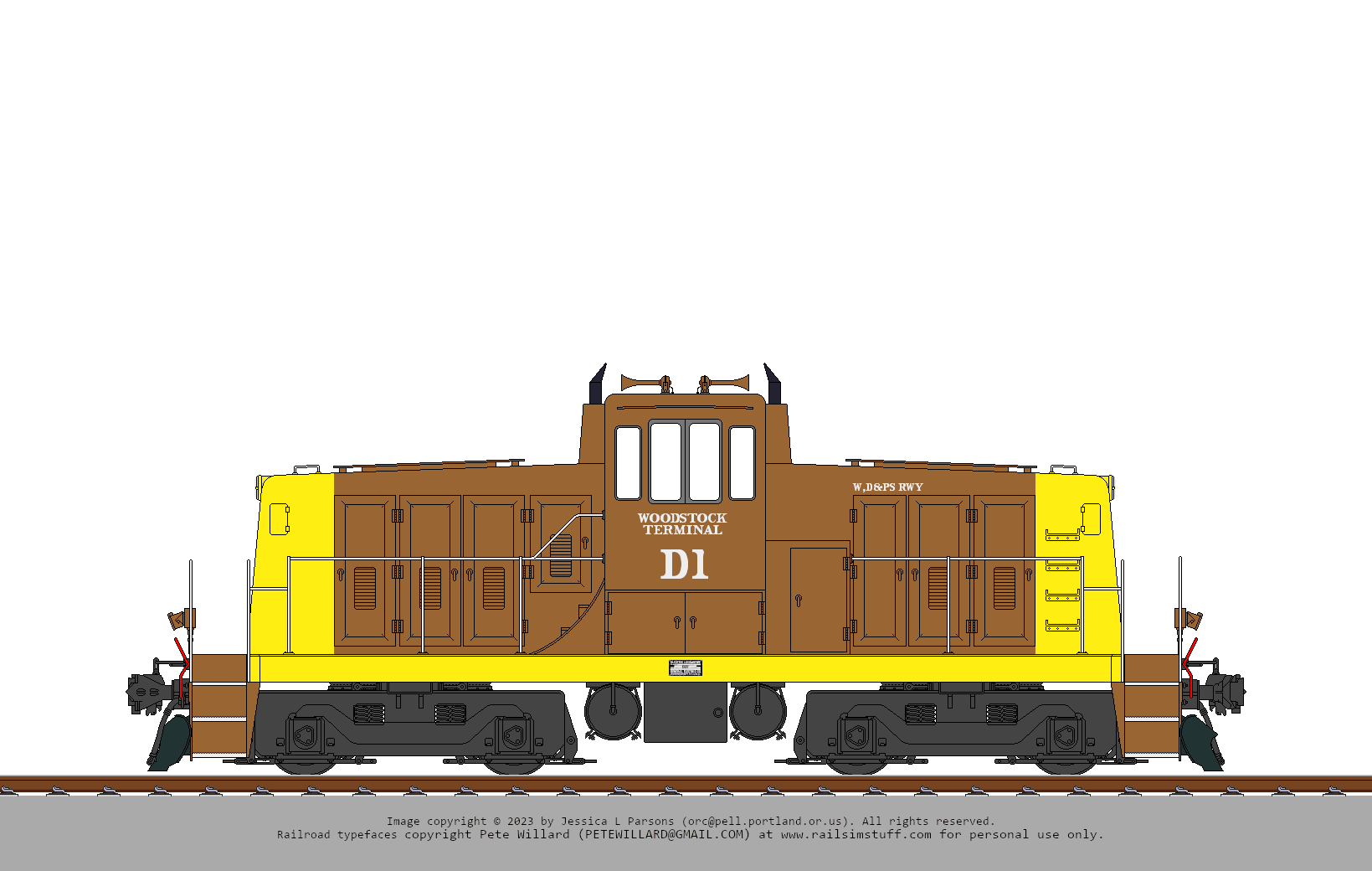
The Woodstock terminal trackage was still 600VDC tension, so it was dieselised at that point. But, surprisingly, the new Otterville to Burgesville line had overhead strung over it, keeping the rest of the line electrified.
The next abandonment was in 1974, when the WD&PS threw in the towel on service to Port Burwell (there was enough traffic for one railway, but both the WD&PS and CPR had lines into town) and cut the line back to a grain elevator in Lynedoch. And then in 1984 the line north of Delhi was cut back from Burgesville to just south of Norwich.
Also, and more significantly, 1984 was when the NYC sold the Canada Southern in pieces to the CNR & CPR (the Michigan Central Tunnel between Windsor and Detroit and the Michigan Central Bridge between the two cities of Niagara Falls) and a shortline investor group that turned out to be controlled by the D&H and LT&L.
The new owners of the CASO then made a very attractive offer for the WD&PS, then turned around and sold it to the Ontario Radial Railway Company, which almost immediately rebuilt the overhead for operation with pantographs instead of the trolley poles the WD&PS had been using since the beginning of operation.
Other than that the new owners left the WD&PS alone, with the exception of purchasing three km of the Canada Air-Line when the CNR abandoned it east of Courtland (the ORRC seriously considered buying the next 11 km east to interchange with the Lake Erie & Northern, but finally decided to let that part of the abandonment proceed.
In 2026, the WD&PS continues to operate as a radial. There is one break in the overhead now; when the Ontario Southwestern electrified the CASO as part of the China Tunnel Project, the WD&PS’s overhead was clipped at La Salette Junction and freight trains now have to just coast over the diamond.
Roster
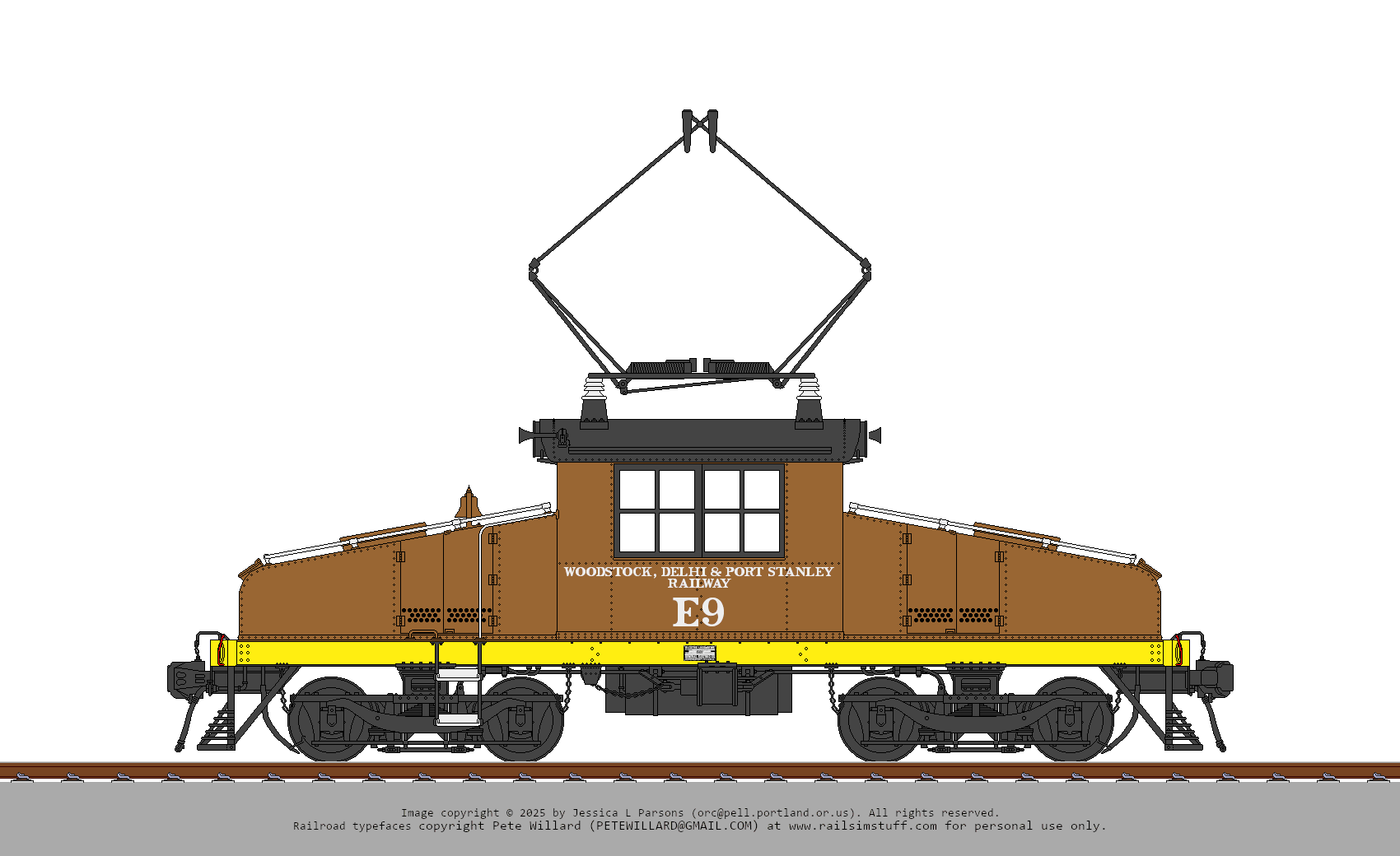
At the time of the ORRC takeover, the WD&PS was down to 4 locomotives; a GE 65 ton diesel-electric (at the Woodstock industrial park) and three GE 50 ton steeplecabs from 1915. After sticking with this roster for another 16 years the WD&PS purchased a class O motor which now handles most of the freight on the remaining system. E16 (the class O motor) is a multi-system unit, so it also is used for transfers along the now-electrified CASO mainline on the rare occasions there is freight that is picked up on the WD&PS and delivered to the main ORRC network.
| Number | type | notes |
|---|---|---|
| D1 | steeplecab | GE 65 ton diesel-electric switcher (Woodstock industrial park) |
| E7,E8 | steeplecab | GE 50 ton motor, out of service & stored in Delhi. |
| E9 | steeplecab | GE 50 ton motor, occasionally used for switching. |
| E16 | steeplecab | Portland class O motor |